
Previous

Next

Index


Poetry in Math

One of the foremost exponents of Vedic math, the late Bharati Krishna Tirtha Maharaja, author of Vedic Mathematics, has offered a glimpse into the sophistication of Vedic math. Drawing from the Atharva-veda, Tirtha Maharaja points to many sutras (codes) or aphorisms which appear to apply to every branch of mathematics: arithmetic, algebra, geometry (plane and solid), trigonometry (plane and spherical), conics (geometrical and analytical), astronomy, calculus (differential and integral), etc.

Utilizing the techniques derived from these sutras, calculations can be done with incredible ease and simplicity in one's head in a fraction of the time required by modern means. Calculations normally requiring as many as a hundred steps can be done by the Vedic method in one single simple step. For instance the conversion of the fraction 1/29 to its equivalent recurring decimal notation normally involves 28 steps. Utilizing the Vedic method it can be calculated in one simple step. (see the next section for examples of how to utilize Vedic sutras)

In order to illustrate how secular and spiritual life were intertwined in Vedic India, Tirtha Maharaja has demonstrated that mathematical formulas and laws were often taught within the context of spiritual expression (mantra). Thus while learning spiritual lessons, one could also learn mathematical rules.

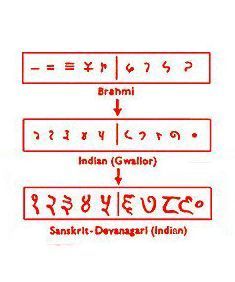
Tirtha Maharaja has pointed out that Vedic mathematicians prefer to use the devanagari letters of Sanskrit to represent the various numbers in their numerical notations rather than the numbers themselves, especially where large numbers are concerned. This made it much easier for the students of this math in their recording of the arguments and the appropriate conclusions.

Tirtha Maharaja states, "In order to help the pupil to memorize the material studied and assimilated, they made it a general rule of practice to write even the most technical and abstruse textbooks in sutras or in verse (which is so much easier-even for the children-to memorize). And this is why we find not only theological, philosophical, medical, astronomical, and other such treatises, but even huge dictionaries in Sanskrit verse! So from this standpoint, they used verse, sutras and codes for lightening the burden and facilitating the work (by versifying scientific and even mathematical material in a readily assimilable form)!" [8] The code used is as follows:

The Sanskrit consonants

ka, ta, pa, and ya all denote 1;
kha, tha, pha, and ra all represent 2;
ga, da, ba, and la all stand for 3;
Gha, dha, bha, and va all represent 4;
gna, na, ma, and sa all represent 5;
ca, ta, and sa all stand for 6;
cha, tha, and sa all denote 7;
ja, da, and ha all represent 8;
jha and dha stand for 9; and
ka means zero.

Vowels make no difference and it is left to the author to select a particular consonant or vowel at each step. This great latitude allows one to bring about additional meanings of his own choice. For example kapa, tapa, papa, and yapa all mean 11. By a particular choice of consonants and vowels one can compose a poetic hymn with double or triple meanings. Here is an actual sutra of spiritual content, as well as secular mathematical significance.

gopi bhagya madhuvrata
srngiso dadhi sandhiga
khala jivita khatava
gala hala rasandara

While this verse is a type of petition to Krishna, when learning it one can also learn the value of pi/10 (i.e. the ratio of the circumference of a circle to its diameter divided by 10) to 32 decimal places. It has a self-contained master-key for extending the evaluation to any number of decimal places.

The translation is as follows:

O Lord anointed with the yogurt of the milkmaids' worship (Krishna), O savior of the fallen, O master of Shiva, please protect me.

At the same time, by application of the consonant code given above, this verse directly yields the decimal equivalent of pi divided by 10: pi/10 = 0.31415926535897932384626433832792. Thus, while offering mantric praise to Godhead in devotion, by this method one can also add to memory significant secular truths.

This is the real gist of the Vedic world view regarding the culture of knowledge: while culturing transcendental knowledge, one can also come to understand the intricacies of the phenomenal world. By the process of knowing the absolute truth, all relative truths also become known. In modern society today it is often contended that never the twain shall meet: science and religion are at odds. This erroneous conclusion is based on little understanding of either discipline. Science is the smaller circle within the larger circle of religion.

We should never lose sight of our spiritual goals. We should never succumb to the shortsightedness of attempting to exploit the inherent power in the principles of mathematics or any of the natural sciences for ungodly purposes. Our reasoning faculty is but a gracious gift of Godhead intended for divine purposes, and not those of our own design. next