
The priceless treasure of divine prema, pure ecstatic love of God, which is fully manifest in Goloka Vrndavana, has descended to this world in the holy name. As such, the highest attainment has been made available to the lowest of persons.
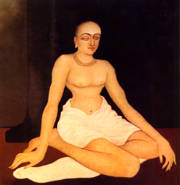 Simply by sincere offenseless chanting of the Hare Krsna maha-mantra one is freed from all gross and subtle material coverings and quickly achieves all perfection. 'Eka' krsna-name kare sarva-papa nasa, "Simply chanting the Hare Krsna maha-mantra without offenses vanquishes all sinful activities" (Cc. Adi-lila 8.26)
Of the four features of the Lord (name, form, qualities, and activities), the Lord's name is the original. From the holy name, the Lord's form, qualities, and pastimes gradually blossom. The entire panorama of Lord Krsna's pastimes is present in the holy name. The holy name awards cognition of the other three features. The Lord himself declares that his name is the highest absolute truth. Therefore, chanting the holy name of the Lord is the prime religious activity of a Vaisnava.
 The only prerequisite for chanting the holy name is faith. One who takes shelter of the holy name with unflinching faith will attain all perfection. Sri Chaitanya Mahaprabhu has mercifully expressed the truths regarding the process of taking the holy name in his Siksastaka. The very first effect of nama-sankirtana gives us the end result of varnasrama-dharma: purification of the heart and mind (ceto-darpana-marjanam). Next, nama-sankirtana liberates the soul from the material entanglement, bhava-maha-davagni-nirvapanam. Then the holy name bestows the supreme goal of life, sreyah kairava candrika-vitaranam. The name asserts itself over us according to the degree of our surrender, and when our surrender is complete, we experience the highest limit of ecstacy, anandam-budhi-vardhanam.
The holy name is not a physical sound, but the descent of the spiritual realm through sound vibration- golokera prema-dhana, hari-nama-sankirtana. The name is all spiritual-cinmaya. Thus it is beyond material contamination and can connect us to the higher reality. Yet the external sound of the letters alone is never the real name, namaksara bahiraya bate tabu name kabu naya(Prema Vivarta7.1). The proper understanding of the name must be present in order to attract the name. The name is the object of loving service, and we must adopt a service disposition to approach the name.
The second verse of the Siksastaka explains that we are unfortunate because, in spite of the merciful nature of the name, we commit offenses and therefore do not achieve any attachment for chanting the holy names, durdaivam idrsam ihajani nanuragah. Only the physical aspect of the holy name is represented in nama aparadha. Success lies in offenseless chanting. Although devotees are aware of the offenses to the name, many are incapable of avoiding them. To make matters worse, many cannot absolve themselves once they have committed an offense. If one continues to chant while committing offenses, one will never taste the fruits of prema.
Even in the dawning of the holy name which occurs before pure offenseless chanting, the inner substance of the name is not present. Namabhasa gives us a slight connection with the holy name. It is neither offensive nor filled with the mood of service. Namabhasa can give us mukti, but not entrance into the spiritual world.
Through namabhasa, the jiva is absolved of all sins and gradually reaches the highest stage of chanting, suddha-nama, or the pure name. This pure stage can only be reached when one is firmly established in the knowledge of sambandha-tattva, or the correct understanding of the relationship between the Lord and his energies. The spiritual master will instruct the disciple in this sambandha-jnana and encourage him to engage in the abhidheya, or the culture of suddha-nama. One obtains love of Krsna (prayojana) only after reaching this stage of pure chanting. The offenses and remedies as related by Haridasa Thakura to Sri Chaitanya Mahaprabhu in the Harinama Cintamani are as follows [these offenses are also given in the Padma Purana Brahma Khanda 25.15-18 in a slightly different order]:
1. Satam ninda namnah paramam aparadham vitanute. The first and foremost offense is sadhu-ninda--to offend or criticize a saintly person. Ninda implies animosity, malice, and other similar such feelings towards a Vaisnava.
A saintly person is one who is completely surrendered to Lord Krsna and is always expounding the glories of the holy name. One cannot distribute the glories of the holy name unless one is empowered by the Lord, krsna-sakti vina nahe tara pravartana (Cc. Antya-lila 7.11). therefore, one should not criticize a person who is thus engaged. The abode of Lord Krsna's mercy is the Vaisnava, the true friend of all living beings.
Criticism of a Vaisnava includes criticizing his caste or social position, an unpremeditated accidental falldown, and the last traces of his previous sins or sinful activities committed prior to his surrender to Lord Krsna. Krsna never tolerates offenses to Vaisnavas, even for one who is supposedly a great devotee, and bhakti goes far away at the first indication of Vaisnava aparadha. Indeed, this offense is compared to an elephant uprooting and trampling one's creeper of devotion: yadi vaisnava-aparadha uthe hati mata. (Cc. Madhya-lila 19.156)
The only remedy for this offense is to fall at the feet of the offended devotee and with sincerity and genuine remorse beg forgiveness. One should try to satisfy the offended Vaisnava with obeisances and various praises. By nature, devotees are very kind and softhearted and will easily forgive the offender. But if for some reason the Vaisnava is not satisfied by our apology, we should render services to him according to his desires for many days. Sometimes the offense is so grievous that the Vaisnava's anger does not abate. Then, in extreme remorse, one should take full shelter of nama-sankirtana. In time, nama-kirtana will deliver one from the offense.
One might think that there is no necessity to humbly and respectfully approach the offended Vaisnava and offer service because the holy name is sufficient to delive an offender, namaparadha-yuktanam namany eva haranty agham( Padma Purana, Brahma Khanda 25.23). This thinking, however, makes one guilty of further aparadha. Additionally, one cannot minimize the offense by pointing out an apparent defect in the offended devotee. In this respect the Padma Purana (BK 25.9-10) states: sarvacara vivarjitah sathadhiya vratya jadvancakah. "Even a person of bad character devoid of proper behavior, a cheater devoid of samskaras and full of worldly desires, must be considered a sadhu if he surrenders to the Lord."
Should one offend a maha-bhagavata, one should not be fooled into thinking that one's offense is meaningless because that Vaisnava does not take offense or become angry. This is the nature of the greatly elevated soul. But the dust of his feet will not tolerate any offense, sersyam mahapurusa-pada-pamsubhir nirasta-tejahsu tad eva sobhanam, "Those who envy exalted souls are certainly diminished by the dust of their lotus feet." (Bhag. 4.4.13) Nor does Krsna himself forgive the Vaisnava offender, as the Vaisnavas are his very heart--sadhavo hrdayam mahyam (Bhag. 9.4.68).
2. Sivasya sri-visnor ya iha guna-manadi sakalam. It is offensive to try to separate the Lord from his holy name, transcendental form, qualities, or pastimes, considering them material. To chant the holy name while maintaining mayavada thought--that the Lord is formless is also namaparadha. The demigods are engaged by Sri Krsna, and they have to discharge their duties according to his order. They are never equal or superior to Krsna. To worship the demigods for some benediction, considering them separate from or superior to the Supreme Lord, thus neglecting the worship of the Lord, is offensive. Haridasa Thakura relates that it is also an offense to accept remnants from demigod worship. However if a devotee worships Lord Krsna and offers the remnants to the demigods, it is not offensive to accept these remnants.
The names of the demigods are all names of Krsna. He is, for example, also Siva, auspicious. Performing sacrifices in which these demigods are petitioned without fruitive desire is also bhakti as in the instance of the gopis' worship of all the demigods.
Those without thorough knowledge say that Visnu is the Lord, not Siva or that Siva is the Lord, not Visnu. Absorbed in such arguments, devotees commit namaparadha. If such offenders can become enlightened by a devotee with thorough knowledge, they can realize the way in which Siva and Visnu are nondifferent, as well as understand that Siva is himself a Vaisnava. With this realization, and by doing nama-kirtana, they can nullify their aparadha.
3. Guror avajna. One must never consider the spiritual master to be an ordinary conditioned soul--acaryam mam vijaniyan navamanyeta karhicit (Bhag. 11.17.27), "I myself am the acarya. Do not think that the guru is an ordinary man. I myself reside within the heart of gurudeva for the benefit of the disciple." Nor should one disregard the instructions of one's spiritual master--ajna gurunam hy avicaraniya (Raghu-vamsa Purana 14.46). One's spiritual advancement depends on pleasing the bona-fide spiritual master--yasya prasadad bhagavat-prasado (Gurvastakam 8). Without the grace of the spiritual master, one cannot make any advancement--yasyaprasadan na gatih kuto 'pi (Gurvastakam 8). One should only engage in Deity worship when authorized by the spiritual master. Even before chanting the holy name, the sincere disciple should remember his spiritual master and his instructions. We must see our spiritual master as the agent of the Lord. We should understand that if our attempt to attain the supreme absolute truth is sincere, then the Lord himself will come to deliver us through a particular agent. Thus the scriptures instruct us to see our guru as the representative of the Lord, because no one can give us Krsna but him. Haridasa Thakura comments, "Never disrespect the articles used by the spiritual master such as his seat, bed, shoes, etc. Whenever and wherever a disciple sees his spiritual master, he should offer his prostrated obeisances to him with prayers. The Guru's name must be uttered with great reverence. His orders are never to be disobeyed. Always be eager to honor his remnants and do not say anything that is displeasing to him. Fall humbly at his feet and beg shelter from him, and in this way act to please him. Simply by behaving in this way, one can easily develop a taste for chanting.
"One who disrespects the spiritual master commits a serious offense that will expel him from the path of pure devotion. The spiritual master, Lord Krsna, and the Vaisnavas must be worshipped with equal devotional fervor. Undeviating faith and devotion in the spiritual master will lead to pure chanting and the final goal of obtaining love of God--krsna-prema."
If a disciple offends his spiritual master, he must give up such offensive activity, sincerely repent and fall at the guru's feet and beg forgiveness.
4. Sruti-sastra-nindanam. Vedic literatures (such as the four Vedas and the Puranas) or other literatures in pursuance of the Vedic conclusions are free from mistakes. They glorify the holy name from beginning to end, tat tu samanvayat (Vs 1.1.4). These transcendental literatures conclusively establish the supreme spiritual truths. It is offensive to criticize or disregard them.
For independent-natured people, completely blinded by material desires and unfit for practicing bhakti, the srutis very mercifully try to make the authority of sastra attractive. This is the purpose of the karma-kanda section of the Vedas. By offering material gain in return for Vedic adherence and stressing the perfect execution of all injunctions, the karma-kanda ultimately awakens faith in the Vedas in the heart of the common man.
Those who have purified their hearts through such Vedic adherence then develop interest in the final portion of the Veda, its' conclusion, Vedanta. Vedanta answers questions about the nature of consciousness indirectly. It speaks of Krsna, or Brahman ,in terms of our oneness with him as much as the karma-kanda speaks of our difference from him and the need to worship him and his agents. Both sections of the Veda are ultimately leading us in the direction of bhakti when understood in context. This truth is revealed through the Vedanta-sutra--Srimad-Bhagavatam. Thus even those sections of the Vedas that do not directly glorify bhakti should be respected.
One may be relieved of the grevious offense of disrespecting the Vedas only by lavishly and repeatedly glorifying the Vedic literatures with the same mouth that criticized them. One should joyfully worship the Vedic literatures with tulasi and flowers.
5. Hari-namni kalpanam. To think that the superexcellent qualities of the holy name are exaggerated is also an offense. It is offensive to think that the glories of the holy name are overstated in the scriptures just to increase one's faith in chanting. All the revealed scriptures are filled with unending glorification of the holy name's exalted qualities.
To doubt these statements is offensive. Haridasa Thakura elaborates in the Harinama Cintamani, "Only a hardened atheist thinks the passages of sruti and smrti scriptures describing the super-excellent qualities of the name contain exaggerations. Whoever commits such an abominable offense rots eternally in hell. Only a reprobate thinks that exaggeration has been used to help inculcate faith and taste in chanting. He has no idea of the purport of the scriptures or of what is beneficial for humanity. He takes everything backwards. Since this person has no reserve of previous pious activities, he can never develop faith in the edicts of devotional service. A person with insufficient piety cannot acquire a taste for chanting and will not have adequate faith in its unlimited results."
One who commits this offense of doubting the glories of the holy name must approach an assembly of Vaisnavas with great humility and hear the Lord's glories from a pure devotee. He must reveal to them his offense to the holy name and beg their forgiveness. The Vaisnavas, being merciful by nature and realized in the glories of the holy name, will quickly deliver the offender from his fate.
6. Namno balad yasya hi papa-buddhir. A devotee may accidentally commit a sinful activity due to a sudden weakness of heart, but such an unpremeditated falldown is washed away by his volumes of devotional service and continuous chanting. However, it is most abominable to commit sin on the consideration that one may then chant and become free of the sin. If one does this, the effect of the sin will increase rather than be destroyed.
Sin happen in two ways: due to sudden weakness or mistake and by premeditation. There is a vast difference between the two. The scriptures declare that one name is sufficient to clear all reactions to all the sins one may commit. However, a person cannot utilize the Lord's name for his own service. Should one make this mistake, one must wholeheartedly take the association of pure Vaisnavas who will offer soothing words and protection from further sin. When undeviating faith in the Lord's holy name develops, the propensity to sin is eradicated.
Haridasa Thakura elaborates further in the Harinama Cintamani, "Chanting gradually diminishes the propensity to sin and simultaneously purifies the consciousness. At this juncture, the taste for chanting begins to manifest and the inclination to commit sinful activities vanish, though a faint residue of previous sinful activity still lingers in the consciousness. The receding sinful reactions leave an odor of sinful habit hanging in the air, but the chanter's contact with the name engenders a purity of willpower and mind that overcomes this clinging stigma of sin. The propensity to sin is like a highway robber attacking a traveler. As the robber flees upon one's cries for help, the pure devotees are our guardians of protection who will chase away these sinful propensities."
7. Asraddadhane vimukhe'py asrnvati. The verdict of the scriptures is that sraddha, firm faith, is an indispensable ingredient for proper chanting of the holy name. Therefore, it is an offense to intiate someone into the chanting of the holy name when that person does not have faith in the name and is not able to appreciate the spiritual significance of the holy name.
Sraddha means to have complete conviction that chanting the holy name automatically fulfills all duties. One without this faith will simply commit increasing offenses to the holy name and burden the intiating guru with a bad reaction. Should the guru inadvertently intiate a faithless person, he must immediately reject the insincere disciple and announce his mistake to the Vaisnava community.
By hearing the public chanting of the holy hames even fallen and faithless people can obtain sufficient sukrti to meet a pure Vaisnava and receive the holy name from him. Therefore, the holy name should be congregationally chanted everwhere.
8. Dharma-vrata-tyaga-hutadi-sarva. To equate the chanting of the holy name with pious activities is also namaparadha. It is caused by one's sinful activities, such as offenses to the Vaisnavas. Minimizing the holy name is offensive because pious activities will give only partial success in the material realm, whereas the name proper brings us to the lotus feet of the Lord himself. Only the shelter of Vaisnava association will free one of this offense. Haridasa Thakura relates to Sri Chaitanya Mahaprabhu in the Harinama Cintamani, "The holy name is fully spiritual and transcendental. Though the jiva is spiritual, he thinks himself material due to ignorance. Consequently, he thinks that everything, including the holy name of the Lord, is likewise material. Thus chanting of Lord Krsna's holy name came to be categorized as subhakarma (pious activity); jivas with mayavadi learnings are convinced that this is right and proper. But those who adhere to this view are excluded from the path of devotional service. "O Lord, other pious activities can never be equal to chanting the name. All of the Supreme Lord's direct names are nondifferent from him, unlike objects made of inert matter, which are separate from their names.
The holy name of the Lord chanted by the pure devotee descends directly from Goloka, the spiritual sky. The pure name then emanates out of his soul and permeates his entire body, dancing on the top of his tongue. One who chants with this understanding is actually chanting the name." Haridasa Thakura further recommends that to again develop the proper attitude towards the chanting of the holy name a devotee must smear his body with the dust of the feet of a so-called low-caste householder Vaisnava. He should then drink the water that has washed that Vaisnava's feet and eat the remnants of his food.
9. Api pramadah. To chant inattentively is also namaparadha. It is to invite the Lord's presence and at the same time ignore him. The three types of negligence in chanting are: apathy (no determination), laziness, and distraction by unimportant unrelated activities. Negligent chanting sows the seeds of anarthas, and no amount of such chanting will ever produce a taste for the name.
To remedy these anarthas, one must regularly chant with great care and attention a fixed number of rounds. One should also chant in the association of saintly Vaisnavas. Such advanced devotees constantly meditate on the Lord's holy name and are very careful to never indulge in mundane talk or activities. One must be very careful to chant quality names, paying particular attention to pronounce the names distinctly. In this way, by constant chanting, one's spontaneous attraction for the Lord's names will manifest.
Haridasa Thakura relates in the Harinama Cintamani, "A devotee must diligently complete the prescribed number of holy names according to his vow, and he must always check that he chants his rounds sincerely. Those who chant distractedly are always eager to somehow complete the fixed number of holy names and be done with it. It is important to concentrate on the quality of the chanting and not on trying to artificially increase the number of holy names. The name of the Lord should be pronounced distinctly. Only by the grace of the Lord can this be achieved. Thus one should pray to the Lord that he never falls victim to the wiles of the illusion and distraction, and that he can continue to taste the full nectar of the holy name."
By himself, the insignificant jiva can never overcome these anarthas; it is only by the Lord's mercy that he may do so. Therefore, one must continuously beg for the Lord's mercy with great humility and chant in a mood of utter helplessness. This brings us to the third verse of the Siksastaka. Here Sri Chaitanya Mahaprabhu has given the criterion of humility required to properly chant the holy name. Pride is our greatest yet most subtle enemy, ultimately taking one to the mayavada conclusion: so 'ham--"I am", not daso 'ham--"I am subordinate." One must realize, "I have no qualification. I am completely empty."
10. aham-mamadi-paramo. Haridasa Thakura states that the worst kind of offense is to maintain a mentality of I, me, and mine. Such thinking manifests as: "I am brahmana," "I am this or that," or "I am in such and such a position." If we do not give up this mentality when it becomes clear that the name is imploring us to do so, we will not achieve love of Krsna. As an anchored boat will not move forward, if we are not open and unprejudiced we will not go where the holy name wants to send us. If we maintain this attitude, we are guilty of the offense of inviting Nama Prabhu to come and then ignoring him.
To get relief from this offense, one must give up all material attachments and humbly serve the devotees, taking full shelter of the holy name. One must not desire any material remuneration in return for one's service. The holy name will award us our most cherished goal of life; he will take us to home sweet home.
11. Tathartha-vado. In addition to the above ten offenses, the Padma Purana lists the additional offense of giving some interpretation of the holy name of the Lord. Srila Sridhara Maharaja comments:
"The sound [of the holy name] is transcendental. The dictionary, grammar books, and any other books of mundane knowledge cannot limit or qualify the holy name. The name itself is the Supreme Person incarnate by his own free will. He is inseparable from his name and fully present in his sound form. The vaikuntha sabda, transcendental sound, is different from the mundane sound that can be produced by the tongue and lips. In homeopathic medicine, all the globules are apparently the same, but the potency within is all-important. It is something like that. The ordinary sound of the name and the sound vibrated by a pure devotee come from different planes. The difference is in the potency within. The holy name descends from the spiritual world and comes to express itself by dancing on the tongue. The transcendental sound of the holy name is inseparable connected with the person whom it represents."